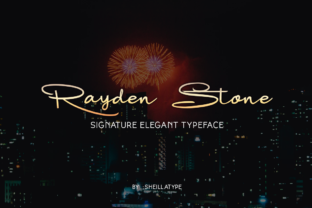
Rayden Stone: A Handwritten Signature Font for Elegant Design
Rayden Stone is a signature font that combines the warmth of handwriting with the refinement of typography. Designed to look elegant and easy to read, it offers a unique blend of personal touch and sophistication. This font is particularly well-suited for projects that require a handwritten appeal, such as signature logos, branding materials, and creative designs.
What Makes Rayden Stone Stand Out?
Rayden Stone is crafted to emulate the natural flow of handwriting while maintaining clarity and readability. Unlike many other fonts that may prioritize style over functionality, this typeface balances aesthetics with practicality. Its curves and strokes are designed to mimic a genuine signature, making it ideal for applications where a personal or artisanal feel is desired.
The font’s design allows for versatility across different mediums. Whether used in print, digital formats, or on packaging, Rayden Stone retains its distinctive character. It can be paired with other fonts to create visually appealing layouts without losing its identity.
Why Consider Rayden Stone?
For designers and businesses looking to add a personal touch to their branding, Rayden Stone offers an attractive option. Its handwritten appearance can convey authenticity, which is especially valuable in industries like fashion, art, and small businesses that rely on a strong visual identity.
Additionally, the font’s ease of reading makes it suitable for use in headings, titles, and short text blocks. This means it can serve both aesthetic and functional purposes in a variety of design contexts.
Benefits of Using Rayden Stone
One of the primary benefits of Rayden Stone is its ability to convey a sense of individuality. In a world dominated by standardized fonts, using a signature-style typeface can help a brand stand out. It adds a human element that can resonate with audiences looking for something more personal than generic typography.
The font’s elegance also makes it a good choice for luxury or high-end branding. Its refined appearance can enhance the perceived value of a product or service, especially when used in conjunction with other premium design elements.
Considerations and Tradeoffs
While Rayden Stone has many strengths, it may not be the best fit for every project. Its handwritten style can sometimes be less legible in large blocks of text, which limits its effectiveness for body copy. Designers should consider this when deciding where to use the font.
Another consideration is the context in which it will be used. For example, in formal or corporate settings, a more traditional serif or sans-serif font might be more appropriate. Rayden Stone’s casual appearance could be seen as too informal in certain professional environments.
Situations Where Rayden Stone Excels
Rayden Stone is particularly effective in projects that emphasize creativity, personal expression, or a handmade aesthetic. It works well for signature logos, wedding invitations, and branding materials for independent artists or small businesses. Its unique character can help these brands establish a memorable identity.
It is also a good choice for social media content, such as Instagram posts or Facebook graphics, where a personalized look can enhance engagement. The font’s visual appeal can make content more eye-catching and shareable.
When Alternatives May Be Better
In some cases, alternatives to Rayden Stone may offer better results. For instance, if a project requires a more formal or structured appearance, a serif or sans-serif font might be more suitable. These fonts often provide greater readability and a more polished look, which can be essential for certain types of communication.
Designers should also consider the target audience. If the audience prefers a more modern or minimalist style, a simpler font could be more effective. It’s important to align the font choice with the overall design goals and the preferences of the intended viewers.
Practical Decision-Making Insights
When evaluating whether to use Rayden Stone, it’s helpful to ask a few key questions. Is the goal to create a personal or artistic feel? Does the font complement the overall design concept? Will it be used in a way that maximizes its strengths while minimizing any limitations?
Testing the font in different contexts can also provide valuable insights. Experimenting with how it looks in various sizes, colors, and backgrounds can help determine its effectiveness for a specific project.
Finally, considering the broader design ecosystem is important. How does Rayden Stone interact with other elements of the design, such as images, colors, and layout? Ensuring harmony between all components can lead to a more cohesive and impactful final result.
Conclusion
Rayden Stone is a versatile and stylish font that offers a unique handwritten appeal. Its combination of elegance and readability makes it a strong choice for projects that benefit from a personal or artisanal touch. However, its suitability depends on the specific needs and goals of the designer or business.
By carefully considering the context, audience, and design requirements, users can determine whether Rayden Stone aligns with their objectives. When used appropriately, it can add a distinctive and memorable quality to any project that values individuality and creativity.